March 30th, 2026

Overview
This week, we discuss a break-in at the Chinese Embassy in Japan and ammendments to Hong Kong's National Security Law.
Diplomacy
Break-in at Chinese Embassy in Tokyo Sparks Further Tensions in Pacific
By Contributor Mitran Kumar
On March 24th, Tokyo Police arrested a member of the Japanese military after an alleged break in at the Chinese Embassy in Tokyo. The incident has since sparked tensions between China and Japan

Photograph of security standing in front of the Chinese Embassy in Tokyo. (via. DW)
Break-in Incident: On March 24th, Tokyo Police announced that they arrested 23-year-old Kodai Murata, who was serving as a second lieutenant of the Japanese Ground Self Defense Forces (GSDF) at the Ebino Garrison in the Miyazaki Prefecture. Murata allegedly broke into the embassy carrying a knife, and requested to speak to the Ambassador stationed there. Murata stated that he was "Hoping to meet the ambassador to tell him to refrain from making hardline remarks, and if that request was rejected, I wanted to surprise him by killing myself.” Murata managed to scale the barbed wire fences in order to reach into the embassy and speak with the Ambassador. As of present, the investigation is still ongoing, with Tokyo Police having since begun a search of the Ebino Garrison to find any more evidence or details regarding the break in and the alleged perpetrator.
Chinese response: In response to the break in, spokesperson for the Chinese Foreign Ministry stated that China was not satisfied with the current efforts by Japan. Claiming Japan should seek stronger responses and harsher punishments. Despite Japanese officials already stating their regret over the incident, and having promised to tighten security around the Embassy, China has re-iterated their belief that not enough is being done. "We cannot help but ask, who was he waiting for by setting such an ambush? What did he plan to do? Japan hasn't offered any explanation on these questions yet," said Chinese spokesperson Lin Jian. These statements come on the heels of already deteriorating relations between Japan and China.
Japan-China relations: Following the election of right-wing conservative Sanae Takeichi as Japan’s first female Prime Minister, Japan’s relations with China have grown increasingly more aggressive. In November of 2025, Prime Minister Takeichi stated she would not rule out the use of military force in the defense of Taiwan, should China take any military action against it. Taiwan, the self-governing island that the Chinese Communist Party claims is their own territory, has been a point of contention between China and other countries in the region. Since then, Japan has increased its military budget to more than 9 trillion yen, or $58 billion USD as a result of increasing tensions with China, with the United States adding pressure for Japan to expand its defense spending. Following this, Japan has since planned numerous deployments of missile defense systems to many islands, including to Yonaguni islands, as well as began an overhaul of its Navy, including the addition of Tomahawk cruise missiles to its destroyer fleet among other naval upgrades, all aimed at counteracting China’s growing military power. The embassy break has become just another incident in a series of increasingly tumultuous developments in China-Japan relations.
Domestic
Amendments to Hong Kong’s National Security Law Bring New Arrests
By Newsletter Director Jason Holman
On March 23rd the Government of Hong Kong implemented amendments to the semi-autonomous region’s 2020 National Security Law.
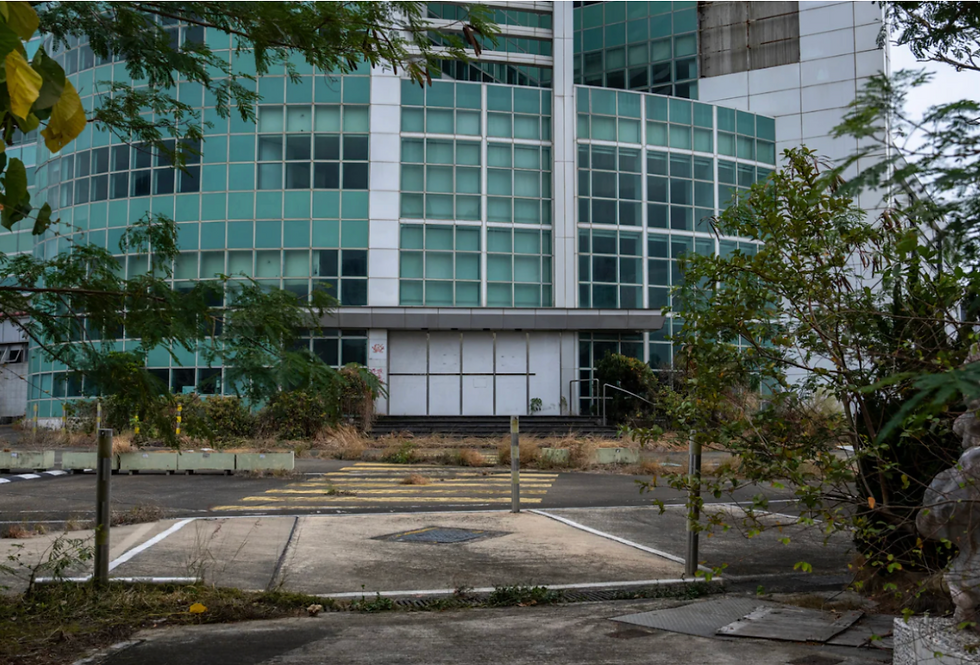
Photograph of the building of the former newspaper Apple Daily in Hong Kong. (via. AP)
National Security Law: On March 23rd Hong Kong’s city leader John Lee announced new amendments expanding the 2020 National Security Laws. The new amendments include giving Hong Kong police the ability to seize items suspected to carry "seditious intent”. Additionally, police can arrest citizens suspected of violating the law for failure to provide phone or laptop passwords for up to 1 year. These are amendments to the controversial 2020 National Security Laws implemented after major pro-democracy protests occurred in Hong Kong in 2019. Critics claim the laws are meant to squash dissent while China argues they are there to maintain stability and prevent terrorism. So far 386 people have been arrested for violating these laws, with 176 people and 4 companies being convicted. The most famous conviction being Jimmy Lai.
Jimmy Lai: Lai was a Hong Kong billionaire and owner of the Apple Daily newspaper. He was sentenced to 20 years in prison for seditious behavior in February. Lai was an open critic of the government in Beijing and Hong Kong and an open supporter of the democratic movement in Hong Kong. His publication, Apple Daily, was shut down in 2021. The conviction of Lai was protested internationally and seen as an erosion of press freedom in Hong Kong. His 3 companies, Apple Daily Limited, Apple Daily Printed Limited, and AD Internet Limited were listed as ‘prohibited organizations’. On March 24th they were officially removed from the Hong Kong company registrar. Further, on March 24th a local Hong Kong bookstore, Book Punch, had its owner and 3 staff members arrested for owning seditious material under the newly amended laws. The seditious material was “The Troublemaker”, a biography of Jimmy Lai.
Southern Cities: The amendments to Hong Kong’s national security laws coincide with similar developments in Macau. On March 19th Macau’s city unanimously passed a law allowing for closed-door trials for trials that pose national security concerns. These developments, both in Hong Kong and Macau, come as international audiences grow more concerned over authorities suppressing political expression in the two regions


GG88 thì mình vừa lướt ké theo lời bạn nói, cũng hơi nghi ngờ kiểu “nhà cái nào chả tự khen”, nhưng vào thử lại thấy trang bày biện khá dễ chịu. Mình chỉ kéo vài vòng cho biết chứ không ngồi đọc kỹ, mà vẫn nắm được ý chính vì các khối nội dung tách ra rõ, khoảng trắng vừa đủ nên mắt đỡ mỏi (không bị dồn chữ sát rạt). Có đoạn giới thiệu nhắc đến tiêu chuẩn vận hành chuyên nghiệp với bảo mật tối ưu, đọc lướt thôi mà cũng thấy họ cố trình bày cho người mới hiểu nhanh. Thêm cái là phần điều hướng đặt ngay chỗ dễ nhìn, bấm qua lại không phải…
Bài viết dễ đọc, nhất là đoạn nói về việc mở thêm văn phòng, cảm ơn bạn đã chia sẻ. Bạn mình gửi link nên mình ghé xem thử. Mình thì ngày nào cũng hay xem thống kê XSMB, nên tự gom lại thành một trang tổng hợp để tra nhanh cho đỡ phải tìm nhiều nơi. Ai cần cập nhật theo ngày thì xem ở đây http://www.askmap.net/location/7882248/vietnam/soicauxsmbpro
Trước đây mình loay hoay khá lâu mới chọn được addon cho Minecraft PE rồi phối với resource pack cho nhìn hợp mắt trước khi cài. Thường mình ưu tiên mấy shader nhẹ vì máy không mạnh, sau đó thử thêm vài map lạ để thế giới đỡ nhàm. Mình cũng hay xem nhận xét trong cộng đồng, nhất là các addon kiểu furniture hay alien invasion, có chấm sao rõ ràng thì dễ quyết hơn và chơi đỡ lỗi vặt. Nói chung mình không tin mấy lời truyền miệng, cứ chọn nơi nào cập nhật đều và kiểm tra thông tin nhanh. thuvienmc Nếu cần chỗ lấy addon Minecraft PE, resource pack và map miễn phí thì mình hay…
Mình thường lướt tin về bitcoin rồi xem thêm vài góc nhìn phân tích kỹ thuật để nắm nhịp lên xuống của thị trường crypto mỗi ngày. Có mấy bài dự đoán giá kèm cập nhật altcoin, memecoin thì mình dễ ghép lại bức tranh chung hơn trước khi quyết định vào lệnh hay đứng ngoài quan sát. Tầm giữa ngày mình hay ghé https://tapchibitcoin.io/ để đọc nhanh, sau đó tự mở biểu đồ lên đối chiếu lại cho chắc. Thỉnh thoảng mình cũng xem chia sẻ trong cộng đồng, nhiều người nhắc nên tham khảo thêm phân tích on-chain và vài tin vắn được chọn lọc vì thường bám dữ liệu thực tế. Với các coin lớn như ETH,…
Mình chơi xổ số kiểu giải trí là chính, chủ yếu mở kết quả lên xem cho vui chứ không đặt nặng chuyện phải trúng to. Trước đây nghe bạn bè bàn tán đủ loại “cầu” với mẹo này mẹo kia, mình cũng thử để ý một thời gian cho biết. Theo dõi lâu hơn thì thấy đôi lúc có vài điểm trùng lặp khiến mình tò mò, nhưng mình vẫn nhắc bản thân đừng quá tin. Mỗi khi đọc mấy bài nhận định, mình thường ghi lại vài ý ngắn rồi chờ kết quả để đối chiếu, xem có phải mình đang tự hợp lý hóa hay không. Trúng chút thì vui, còn sai thì coi như thêm kinh…